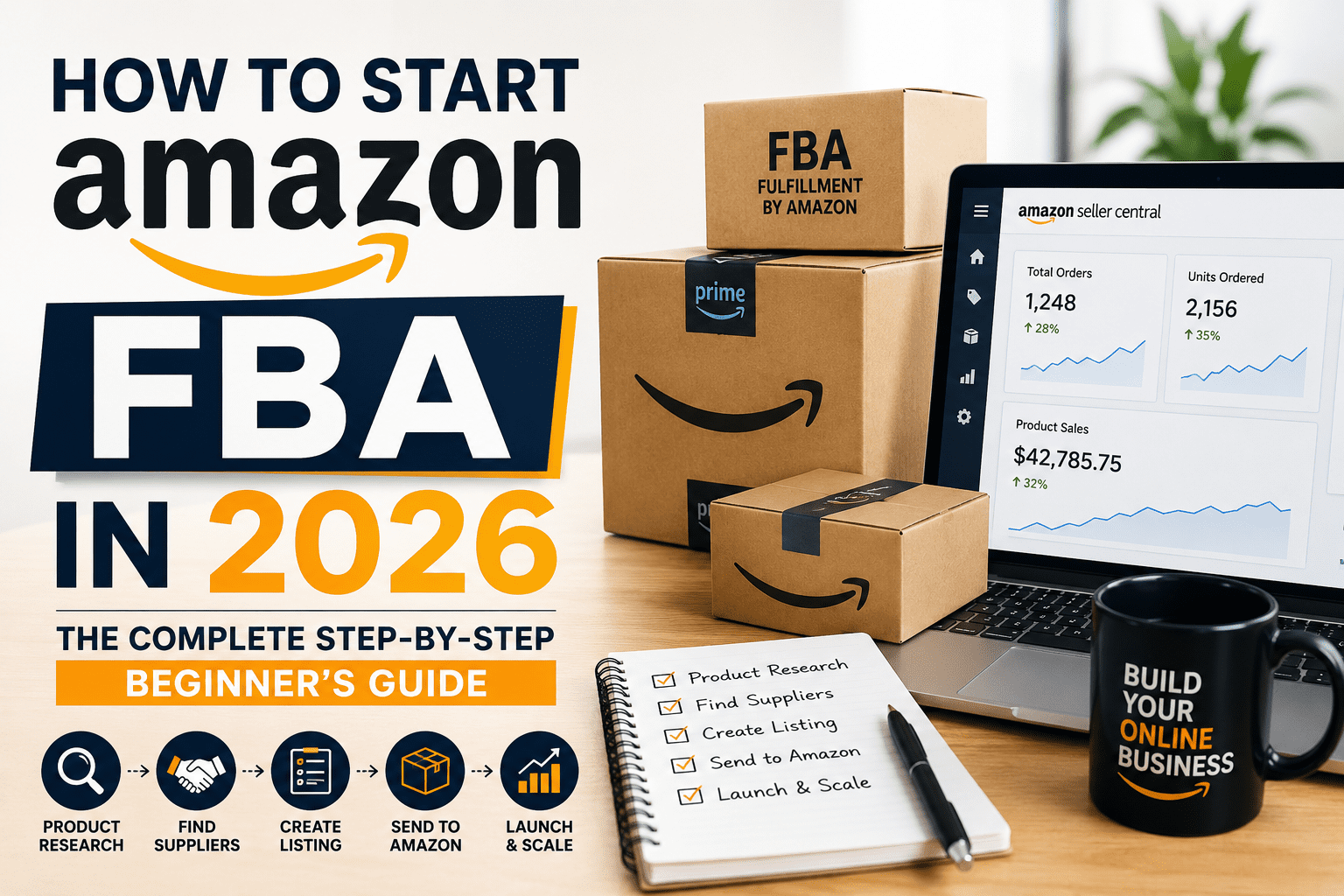
How to Start Amazon FBA in 2026
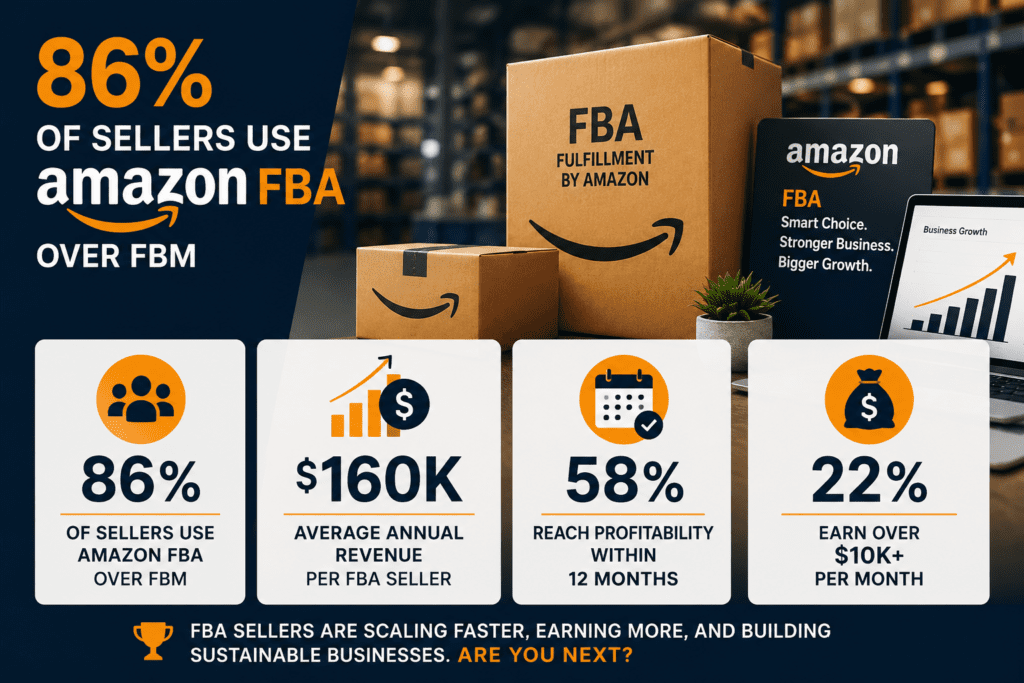
Amazon FBA in 2026 is not a rush for quick riches — it is a serious business that requires preparation, data, and effective execution. The good news is that 89% of Amazon sellers are profitable, nearly 30,000 sellers make over a million dollars annually, and approximately 550 new sellers start each day. The potential is huge. This guide provides the precise roadmap to help you get started.
If you're wondering whether starting an Amazon FBA business in 2026 is still a good idea, the numbers show it is — but only if you approach it with the right strategy.
Sellers who struggle are not simply unlucky. They often skip essential product research, underestimate expenses, and launch without proper data. Successful sellers, on the other hand, follow a well-proven system.
This guide outlines every step of that system, including the most recent 2026 fee updates, realistic startup budgets, and the exact tools needed to build a sustainable business.
“Most beginners should start with FBA.” you can read difference between fba vs fbm
What Is Amazon FBA and How Does It Work in 2026?
FBA stands for Fulfillment by Amazon. Essentially, here is how it works: you find products and send your inventory to Amazon’s fulfillment centers. From there, Amazon handles storage, packing, shipping, customer support, and returns for you. This allows you to focus on sourcing products, optimizing your listings, and growing your brand while Amazon manages the logistics.
FBA vs FBM: Which Should You Choose?
Most beginners should start with FBA. Here is a quick comparison:
| Factor | Amazon FBA | FBM (Self-fulfilled) |
| Prime eligibility | ✓ Automatic | ✗ Seller Fulfilled Prime only |
| Storage handled by | Amazon | You |
| Customer service | Amazon handles it | You handle it |
| Shipping speed | 1–2 days (Prime) | Depends on your setup |
| Fees | Fba Fees Per Unit | No FBA fees, You Pay Shipping |
| Scalability | High — no ceiling | Limited by your team |
Bottom line: FBA sellers are 5.2× more likely to achieve strong first-year earnings and 3× more likely to scale past $100,000 per year compared to FBM sellers.
Step 1: Select Your Amazon Selling Model
Before you begin researching a product, it's important to decide on the business model you'll use.
Each model comes with different initial costs, levels of risk, and potential for profit.
A) Private Label (Recommended for Beginners)
In this model, you find a product, create your own brand, and sell it as if it were your own.
This is the most common approach, used by 73% of Amazon sellers, and it offers the highest profit margins and brand value. Initial costs typically range from $2,000 to $5,000.
B) Wholesale
You purchase branded items in large quantities from manufacturers or distributors and sell them on Amazon.
This model carries lower risk and lower profit margins. Initial costs usually fall between $1,000 and $3,000.
C) Retail / Online Arbitrage
You buy discounted products from retail stores or online retailers and resell them on Amazon.
This option has a low initial cost (around $500 or more), but it can be very time-consuming and challenging to scale.
D) Handmade / Bundles
You create custom-made items or combine existing products into unique multi-packs.
This can help you stand out, but it becomes more complex to manage as your business grows.
⚠️
For most new sellers in 2026, the private label model is the most suitable choice.
It gives you full control over your brand, higher profit margins (usually between 25% and 40%), and protects you from other sellers using your product. The rest of this guide will focus mainly on the private label approach.
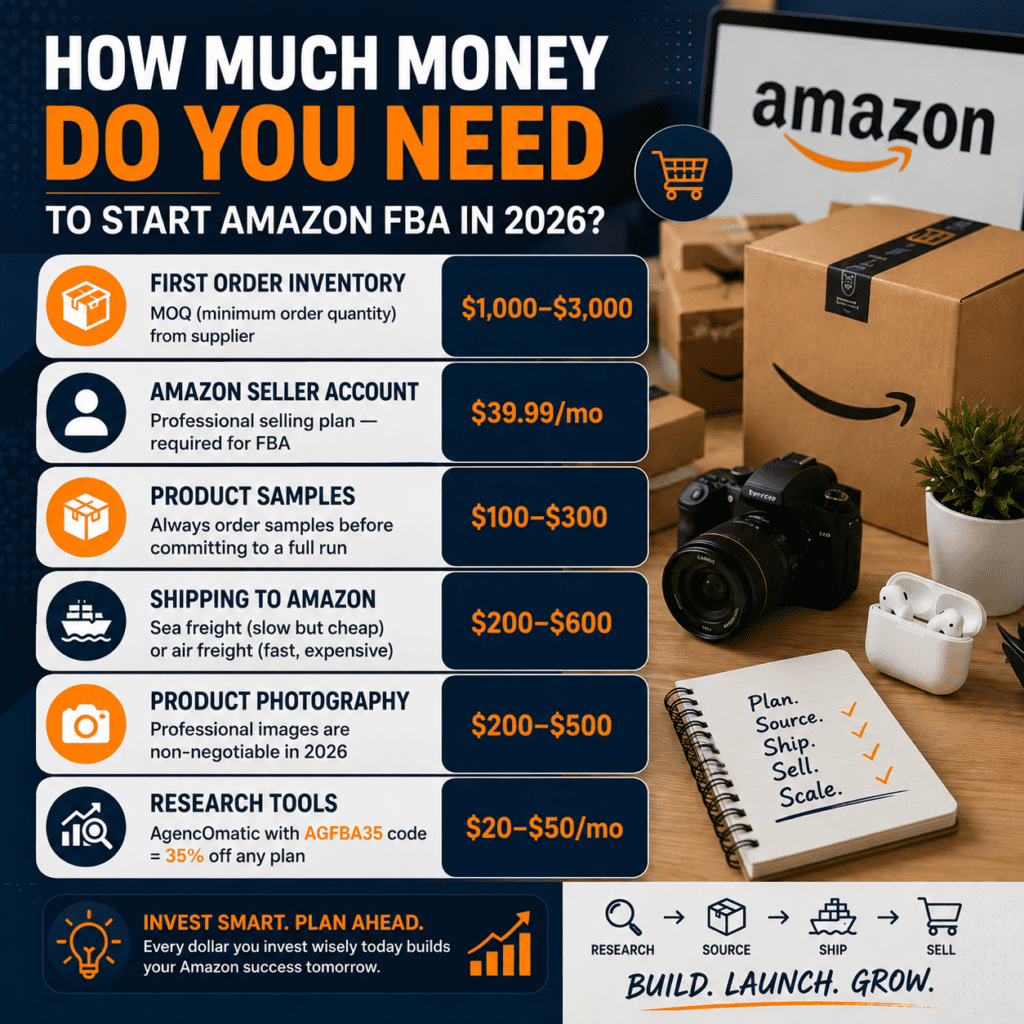
How Much Money Do You Need to Start Amazon FBA in 2026?
Let us be honest about startup costs — because this is where most beginner guides lie to you. The idea that you can start with "$500 and a laptop" is mostly a myth in 2026. Here are realistic numbers:
Step 2: Find a Profitable Product (The Most Important Step)
This is the key phase in your Amazon FBA journey.
Most sellers end up failing because they choose the wrong product, not because of poor marketing or unreliable suppliers.
By 2026, product research is no longer based on intuition or copying popular items.
It has evolved into a process driven by data. You need to identify a product that meets these criteria:
- Consistent search demand of 3,000 or more monthly searches
- Monthly market revenue between $50,000 and $500,000 (indicating a healthy market, not a monopoly)
- Low to medium competition — preferably fewer than five major brand players
- Average selling price of $20 to $70 (this range offers the best profit margins for FBA)
- A gross margin of 30% or higher after accounting for all Amazon fees
- Minimal seasonality — the product should sell throughout the year, not just during specific periods like the fourth quarter.
Step 3: Source Your Product
Once you have validated your product idea with data, the next step is to find a reliable supplier.
In 2026, the most trustworthy platforms for Amazon private label sellers are as follows:
Alibaba.com
— This is the world's largest B2B marketplace.
It is ideal for locating manufacturers offering low minimum order quantities and having English-speaking support teams.
1688.com
— This is a Chinese-based marketplace (which may require translation).
It often offers products 20–30% cheaper than Alibaba for the same manufacturers.
Global Sources
— This platform is particularly strong for electronics and technology products.
The suppliers are generally larger and have more experience in exporting.
Trade Shows
— Events such as the Canton Fair in China and the Hong Kong Mega Show are excellent for inspecting product quality directly and building strong business relationships.
Local Manufacturers
— These include countries such as the USA, India, Vietnam, and Mexico.
While the costs may be higher, shipping is typically faster, there is better protection for intellectual property, and the "Made in [Country]" branding can be a significant advantage.
Pro tip: Always order 2–3 samples from different suppliers before committing to a full order. Never skip this step. The sample tells you what your customer will receive — and returns will kill your account health if the product quality does not match expectations.
Step 4: Create Your Amazon Seller Account
Setting up your Seller Central account is a simple process.
Here are the items you will need:
- A government-issued ID such as a passport or driving license
- A business or personal bank account for receiving payments
- A credit or debit card for paying account fees ($39.99 per month for the Professional plan)
- A phone number for two-factor authentication
- Business registration documents (if you are selling as a company — this is recommended)
⚠️
Always go with the Professional Selling Plan ($39.99 per month).
The Individual plan charges $0.99 for each item sold, and this cost increases significantly once you sell more than 40 units per month. The Professional plan also gives you access to FBA, advertising, A+ Content, and brand registration — all of which are essential for serious sellers.
Step 5: Build an Optimized Product Listing
Your listing acts as your storefront.
In 2026, with over 350 million products on Amazon, the competition is more intense than ever; therefore, even if your product is high quality, a poorly written listing with weak images will likely fail to convert, since customers rely heavily on optimized visuals and persuasive copy before making a purchase decision.
The 7 Elements of a High-Converting Amazon Listing
01 Title (200 characters)
Include your main keyword in the first 80 characters.
Recommended formula: [Brand] + [Main Keyword] + [Key Features] + [Size/Color/Pack]
02 Main Image
Use a pure white background, and ensure the product occupies 85% of the frame.
This is the most impactful element for increasing click-through rates. Consider hiring a professional photographer for better results.
03 Bullet Points (5 bullets)
Start each bullet point with a capitalized benefit headline.
Focus on what the product does for the customer, not just on what it is. Naturally include secondary keywords.
04 A+ Content
This feature becomes available once you register your brand.
A+ content can increase conversion rates by 3–10%. Include comparison charts, lifestyle images, and brand story modules.
05 Backend Keywords
These are 250 bytes of hidden search terms that are not visible to customers but affect your organic ranking.
Add keyword variations, alternative spellings, and Spanish-language terms for US listings.
06 Gallery Images (6–7 images)
Include a lifestyle photo, an infographic with key features, a size comparison, a use-case scenario, and a packaging shot.
If available, also include a video thumbnail.
07 Price Point
Research the price range in your category using SellerSprite Market Analysis.
Price your product in the top 30% of your niche — avoid competing on price alone.
Step 6: Send Inventory to Amazon FBA
Once your product is prepared, the next step is sending it to Amazon’s fulfillment centers. Below is an overview of the main shipping options available.
| Shipping Method | Transit time | Cost | Best For |
| Sea Freight (LCL) | 28–40 days | $1–$3 | Large, heavy shipments |
| Sea Freight (FCL) | 22–32 days | $0.50–$1.50 | Full container, 500+ units |
| Air Freight | 07–12 days | $4–$8 | Small, urgent, high-value items |
| Express (DHL/FedEx) | 05–08 days | $8–$15 | Samples, urgent small orders |
| Rail (China–Europe) | 15–19 days | $2–$4 | EU-based sellers, good balance |
In 2026, Amazon removed its own fulfillment services in March. Now, you must have your supplier prepare products according to Amazon's requirements or use a third-party prep center (3PL) before sending items to Amazon. If you choose a 3PL service, plan for an extra cost of $0.25 to $0.75 per unit.
Step 7: Launch and Rank Your Product
Your product listing is now live.
Now, you need to focus on driving sales because Amazon's algorithm favors products that sell. New listings don’t have any rank history, so it's important to generate sales quickly. Here’s how to launch effectively:
Amazon PPC (required):
Begin with an automatic campaign to identify which keywords bring in clicks and conversions.
Set a daily budget of $20 to $50 for the first two weeks. After that, move the best-performing keywords to manual campaigns.
Pricing strategy:
Launch your product at a competitive price, ideally 5–10% below the market average, to boost early sales and improve your ranking.
You can increase the price once you have 10 or more customer reviews.
Request reviews legally:
Use Amazon’s “Request a Review” button in Seller Central for each order.
Avoid third-party review services that break Amazon’s Terms of Service.
Amazon Vine:
If you're enrolled in Brand Registry, use Vine to get up to 30 free reviews from Amazon’s trusted reviewer network.
The cost is $200 per ASIN.
Coupons and promotions:
Having a visible coupon badge on your product listing can increase your click-through rate by 15–25%.
Start with a 10% launch coupon.
External traffic:
Drive traffic to your listing from social media platforms like TikTok, Instagram, and Pinterest using Amazon’s Attribution links.
Amazon rewards external traffic with ranking boosts and a 10% Brand Referral Bonus on sales.
Amazon FBA Fees in 2026: What You Actually Pay
Understanding your fee structure is essential before launching any product.
Here are the main costs every FBA seller will pay in 2026:
| Fee Type | Amount | Notes |
| Referral Fee | 8–15% of sale price | Most categories: 15%. Electronics/computers: 8% |
| FBA Fulfillment Fee | $3.06–$6.00+ | Standard size. Increased avg. $0.08/unit in 2026 |
| Monthly Storage Fee | $0.78/ft³ (standard) | Jan–Sep rate. Oct–Dec: $2.40/ft³ |
| Inbound Placement Fee | $0.21–$0.53/unit | For shipments Amazon redistributes to multiple FCs |
| Low Inventory Fee | $0.32–$1.11/unit | Triggered when < 28 days of supply on hand |
| Aged Inventory (181+ days) | $3.80/ft³ | Clear slow-moving inventory before 181-day mark |
| Aged Inventory (12–15 months) | $6.90/ft³ | Updated for 2026. Avoid at all costs. |
| Professional Seller Account | $39.99/month | Fixed monthly — ignore if selling 40+ units/mo |
💡
Target margins: For established products, aim for 30–40% of revenue going to advertising. After all fees (referral, FBA, storage, PPC), a healthy private label product nets 20–30% profit margin. Use SellerSprite's Profit Calculator to model this for every product you consider before sourcing.
Step 8: Scale Your Amazon FBA Business
Once your first product is profitable and generating steady sales, it's time to grow your business.
Here's how scaling looks in 2026:
1. Expand Your Product Catalog
Add related products within the same niche.
This helps build authority in your category, creates more opportunities for selling additional items together, and reduces your reliance on a single product.
2. Register Your Brand (Amazon Brand Registry)
By registering your brand with a trademark, you gain access to Amazon Brand Registry. As a result, you unlock benefits such as A+ Content, Sponsored Brands ads, a Brand Store, Brand Analytics, and protection against counterfeit sellers. Ultimately, this step becomes essential as your business grows.
3.Expand to International Marketplaces
In 2026, 40% of new FBA sellers are based outside the United States. As a result, using Pan-European FBA allows you to sell in the UK, Germany, France, Italy, and Spain from a single inventory pool. Consequently, many sellers report 15–25% higher profit margins in less competitive international markets.
.
4. Optimize PPC with Data
Use Helium 10 to track the keywords competitors are using and how much they're paying for them.
This helps you find high-performing, low-cost keywords before competitors do, allowing you to spend your ad budget wisely.
5. Build External Traffic Channels
Amazon's Brand Referral Bonus rewards you with 10% of sales generated from outside Amazon traffic.
Develop a presence on TikTok, build an email list, or create a direct-to-consumer website that drives visitors to Amazon. This helps lower your reliance on paid ads and can also improve your product rankings.
Essential Tools for Amazon FBA Beginners in 2026
You don't need 15 tools.
You need the right 4–5. Here is the streamlined set that covers everything a beginner needs:
| Tool | Purpose | Cost | Priority |
|---|---|---|---|
| Helium 10 | Product research, keywords, competitor intel, market analysis, profit calculator | Free plans available | Essential |
| Amazon Seller Central | Official dashboard for managing listings, inventory, orders, advertising | $39.99/month | Essential |
| Canva | Listing graphics, infographics, A+ content design | Free / $15/month | Recommended |
| Keepa | Price history and BSR history charts | €19/month | Recommended |
| Jungle Scout | data-driven product decisions | Free plans available | Recommended |
Common Amazon FBA Mistakes to Avoid in 2026
Understanding what to avoid is just as important as knowing what to do.
Here are the most frequent and expensive mistakes that new FBA sellers often make:
In particular, selecting a product without conducting thorough keyword and market research can result in slow-moving or unsold inventory.
Not ordering samples before starting full production can lead to unexpected quality issues, which may damage your product reviews.
Underestimating the initial investment can cause financial difficulties before your second order, which can halt your business growth.
However, launching with only 2–5 reviews can make it hard to attract buyers, as social proof is essential for successful product launches.
Consequently, setting a listing price that leaves no room for profit after deducting fees and advertising costs can lead to financial losses.
Frequently Asked Questions
Yes. According to 2026 data, 89% of Amazon sellers report profitability, and nearly 30,000 sellers earn over $1 million per year. The market is competitive, but the opportunity is larger than ever — Amazon's total revenue is projected to reach $764 billion in 2026. The sellers who succeed are those who treat it as a real business: doing proper research, managing margins, and using the right tools.
The average FBA seller earns about $160,000 each year, but the median income is closer to $35,000. Around 22% of professional sellers make more than $10,000 every month, while 13% earn between $25,000 and $50,000 monthly. These figures can change a lot depending on the products sold, how much is spent on marketing, and the number of ASINs managed. Most top-performing sellers typically manage 3 to 10 products, rather than just one.
58% of Amazon FBA sellers achieve profitability within 12 months. 22% do it in under 3 months. Realistically, plan for 3–6 months from the day you start research to your first profitable month. The timeline includes: product research (4–6 weeks), sourcing and sampling (4–8 weeks), shipping to Amazon (2–5 weeks depending on freight method), and launch ramp-up (4–8 weeks).
No — individuals can sign up for a seller account and begin selling. However, as your business grows, creating an LLC (in the US) or a similar business structure in other countries helps protect your personal assets, provides better access to banking services, and makes your business look more trustworthy to suppliers. Many sellers choose to form a business entity once their annual revenue reaches around $50,000.
Yes. In 2026, 40% of new FBA sellers are located outside the United States. You can sell on Amazon.com from nearly any country, and Amazon operates marketplaces in more than 20 countries. Sellers from outside the US usually start by focusing on Amazon.com (USA), as it is the largest marketplace, and then they may expand to other platforms such as Amazon.co.uk, Amazon.de, and Amazon.co.jp.
poor product research
underestimating fees
weak keyword optimization
ordering too much inventory
ignoring reviews
not planning advertising