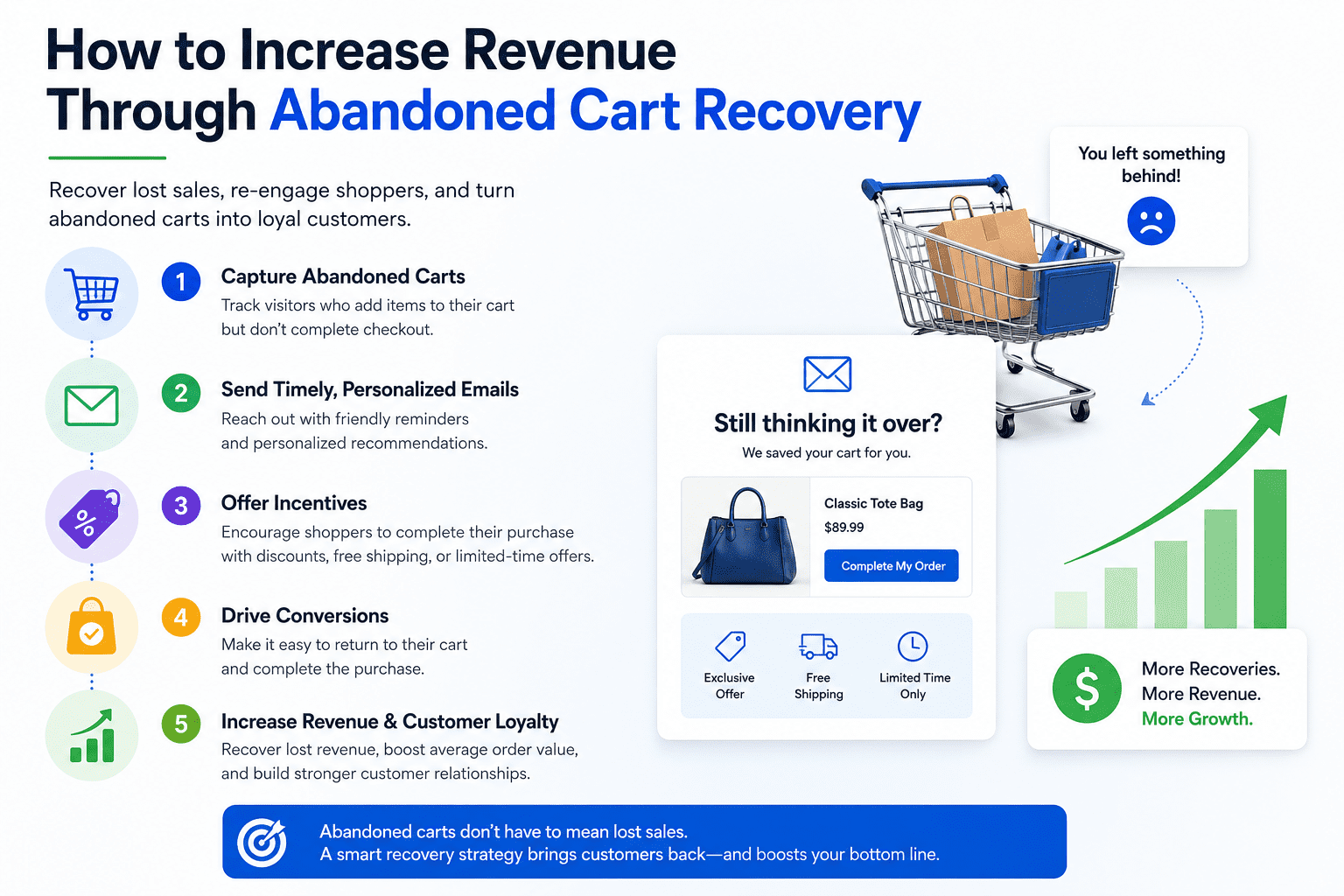
In this post, you'll learn how to recover abandoned carts and increase your e-commerce revenue.
Abandoned shopping carts are one of the biggest challenges facing online businesses.
December has the highest online cart abandonment rate, followed by November and January. On average, nearly 70% of shopping carts are abandoned, resulting in billions of dollars in lost revenue each year. It is estimated that cart abandonment costs e-commerce businesses approximately $18 billion annually.
Acquiring new customers is expensive, and building the trust that leads to a purchase takes time and effort. That's why it's essential not to lose customers at the final stage of the checkout process.
When a customer abandons their cart, your business loses an immediate sales opportunity. Even worse, many shoppers complete their purchase with a competitor instead, potentially becoming loyal customers of another brand and reducing your chances of winning them back.
Studies show that 26% of shoppers who abandon their carts eventually purchase the same product from a different retailer.
Cart abandonment is particularly common among younger consumers. Millennials aged 25–34 have some of the highest online shopping abandonment rates, while consumers aged 18–24 are also among the most indecisive online shoppers.

What can you do about abandoned carts?
Marketing automation enables you to reach out to customers based on what they do or don't do. This is especially useful in the case of abandoned carts. You have a group of customers who have already shown interest in your product through browsing or adding items.
Use email marketing and SMS to continue the conversation even after they leave their cart without completing a purchase.
Can abandoned cart campaigns work outside of e-commerce?
It's essential not to see abandoned cart programs as something that only applies to B2C or e-commerce businesses.
Marketers can use abandoned browse emails in a similar way. For a B2B brand or service, think about what actions indicate high interest.
Whether it's filling out a form or checking a pricing page, you can create abandoned browse emails to engage customers who stop without finishing an action.
Use the same strategies as e-commerce brands. Identify what might be preventing a customer from completing their action and address it in your follow-up automation.
Why do customers abandon carts?
There are many reasons why people leave their carts without making a purchase. A study found that:
- 48% of customers abandoned their carts because of extra costs, such as taxes and shipping.
- 24% didn't want to create an account.
- 22% found delivery options too slow.
- 18% didn't trust the site with their payment information.
- Other reasons included the site being too slow, the returns policy not being clear, and not enough payment options being available.
How to drive revenue from abandoned carts
Once you understand the pain points of your customers, you can work on solving them. The main reasons given by consumers generally center around trust, value, and ease.
Build trust
Social proof is a psychological tendency where people are more likely to follow the actions of others, assuming that if others are doing something, it must be safe and beneficial.
It's been a powerful marketing tool for a long time, especially for first-time customers who are unfamiliar with your brand.
Social Proof


This example from Shopocity employs subtle social proof by mentioning that the product is "selling fast." This informs customers that what they are considering is popular and approved by others. It also emphasizes the product's Platinum Feefo review rating, giving customers the option to explore more information if they wish.
Share Your Reviews
Including your overall brand review rating or specific product ratings related to the abandoned cart is a great way to build trust.
Ninety-two percent of consumers are hesitant to make a purchase if there are no customer reviews, and 92% of B2B buyers are more likely to make a purchase after reading a trusted review. Dotdigital integrates with review platforms such as Trustpilot, Reviews.io, and Yotpo, making it easy to include reviews in your automation campaigns.
Include User-Generated Content
User-generated content (UGC) is created by your existing customers, such as social media posts, and it helps show potential customers that others enjoy your brand.
Like reviews, UGC is based on social proof. UGC often feels less polished and more authentic to consumers because it comes from real people rather than the brand itself.
Offer Value
Value is especially important as we face a cost-of-living crisis.
In our recent research, 44% of respondents said that "the brand has affordable prices" is one of the top factors when choosing a brand to buy from.
Discounts and data capture

This example from Shopocity provides a special-looking discount code to customers to encourage them to complete their abandoned cart.
The email also includes a block for capturing SMS marketing details, offering an even bigger discount in exchange for the customer's contact information. Giving customers perks as an incentive to sign up for other marketing channels or a loyalty program enhances their experience and increases their long-term value. It benefits both the customer and the business.
Discounts and RFM
When it comes to discounts, you shouldn't just send them to everyone. Doing so can hurt your profits and make customers expect or depend on discounts before making a purchase.
Discounts and AOV
Another important consideration is how much a customer is spending. Is a discount worth it?
If you offer a discount that requires customers to spend a certain amount, you can not only recover the abandoned cart but also increase the average order value. This is where AI-powered product suggestions come in, helping customers easily find and add items to their cart.
Making the process simple is key, especially in today's fast-paced world.
It might seem obvious, but make sure your abandoned cart campaigns show the products the customer left behind. This can be easily done by connecting your store or website.
Keeping the customer journey simple is also important. You want to minimize the number of steps the user has to take, so make sure they can click through and see the item already in their cart. If possible, have the item already on the right page and ready to purchase. If you're offering free shipping or any other discount incentives, set it up so these are automatically applied, and the customer doesn't have to manually enter or copy codes.
SMS marketing

Remember that email is not the only way to reach customers. SMS marketing can effectively cut through the clutter of a busy inbox and capture attention. This example from denim brand Good American includes the product name to help shoppers remember what they were looking at, offers a 10% discount, and provides a direct link to checkout. The message is kept very clear and straightforward.
Highlight Perks
One drawback of online shopping is that you can't physically examine or try on the product. Because of this, having a strong returns policy is essential. If you have a good returns policy, make sure to include it in your abandoned cart messages.

Beauty brand Estee Lauder Choice includes a section at the end of their email that highlights key benefits such as a money-back guarantee, free shipping, free consultations, and free recycling. This emphasis reinforces the value the brand offers by making the customer experience easier, aligning with ethical values, and providing reassurance through the money-back guarantee, which helps reduce any hesitation from new customers.
Other advantages worth mentioning include the range of payment options available and, for those who prefer quick delivery, promoting fast shipping options can also encourage customers to complete their purchase.
Setting Up an Abandoned Cart Program
Once you have identified the right content, how can you create an automated abandoned cart program?
Setting up an automation program might seem challenging, but it can be as straightforward or detailed as you choose based on your available time.
Even a simple email reminding customers that they left an item in their cart can significantly increase conversion rates. This approach often generates more sales compared to sending no follow-up message at all after cart abandonment.
The benefit of automation is that once it is set up, it continues to work in the background without requiring constant involvement.
It is important to track and analyze the performance of your automation campaigns to keep improving them, although the initial effort is worth it due to the ongoing revenue it brings.
For more insights, tips, and updates, visit our blog.