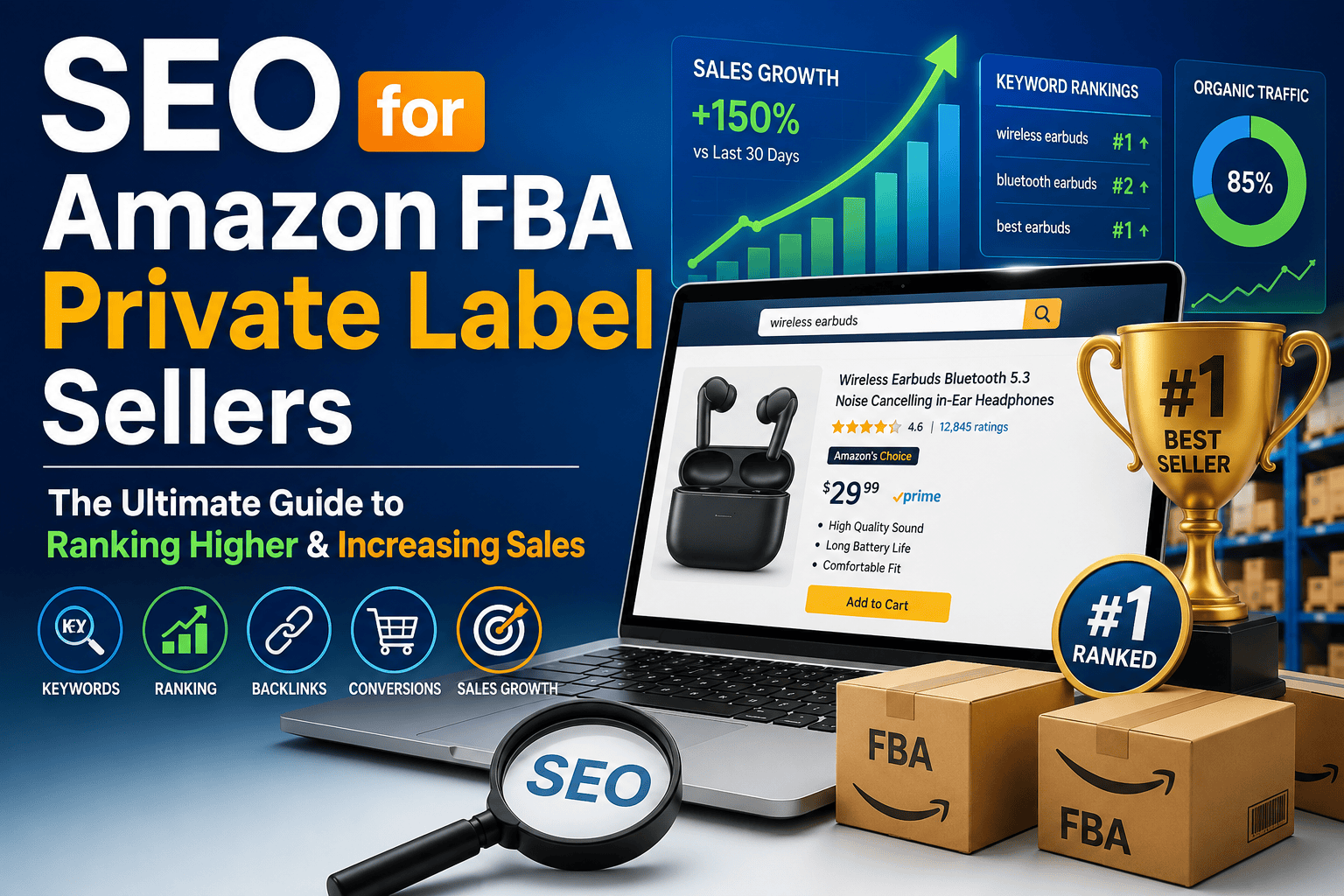
Introduction
Selling on Amazon is more competitive than ever. With so many products in every category, just listing your product is not enough. To get noticed and make steady sales, Amazon FBA sellers need to optimize their listings for Amazon's search engine.
Amazon SEO means improving your product listings so they show up higher in Amazon's search results. When your products are easier to find, you get more clicks, more sales, and more revenue. Amazon wants customers to find products they are likely to buy, so its algorithm favors listings that are relevant, clear, and likely to sell.
This guide will walk you through everything Amazon FBA sellers need to know about SEO, from keyword research and listing optimization to conversion tips and best practices.
What Is Amazon SEO?
Amazon SEO means making your product listings better so they rank higher in Amazon's search results. Unlike Google and other search engines, Amazon cares most about whether a product will sell. Products that match what customers want and are likely to sell get better visibility.
Amazon looks at things like keyword relevance, sales history, conversion rate, customer reviews, pricing, and whether you have products in stock when deciding how to rank listings.
Why Amazon SEO Matters
An optimized listing offers several advantages:
- Increases product visibility in Amazon search results
- Generates more organic traffic
- Improves click-through rates
- Boosts conversion rates
- Reduces dependence on paid advertising
- Increases long-term profitability
Most shoppers do not look past the first page of search results, so ranking higher can make a big difference in your sales.
Step 1: Conduct Thorough Keyword Research
Keyword research is the starting point for every successful Amazon listing. You want to find out which words and phrases customers use when they search for products like yours.
Popular keyword research methods include:
- Amazon search autocomplete
- Competitor product listings
- Amazon Brand Analytics
- Customer reviews
- Third-party keyword research tools
Focus on several keyword types:
- Primary keywords
- Secondary keywords
- Long-tail keywords
- Seasonal keywords
- Problem-solving keywords
For example, instead of targeting only "water bottle," include phrases such as:
- Insulated water bottle
- Stainless steel water bottle
- Leakproof water bottle
- Vacuum insulated bottle
- Sports water bottle
When you use relevant keywords naturally in your listing, it helps Amazon understand your product and makes it easier for shoppers to find you.
Step 2: Optimize Your Product Title
Your product title is one of the most important factors for ranking on Amazon.
An effective title should include:
- Brand name
- Primary keyword
- Product type
- Key features
- Size or quantity
- Color (when applicable)
Example:
ABC Stainless Steel Water Bottle 32 oz – Vacuum Insulated, Leakproof, BPA-Free Sports Bottle, Keeps Drinks Cold for 24 Hours
Avoid keyword stuffing or creating, Do not stuff your title with keywords or make it hard to read. Write titles that make sense for both customers and Amazon's search system.
Your bullet points should highlight the product's benefits and include relevant keywords in a natural way. explain how those features improve the customer's experience.
Example:
- Keeps beverages cold for up to 24 hours and hot for 12 hours.
- Leakproof lid prevents spills during travel.
- Premium food-grade stainless steel resists rust and odors.
- Lightweight design fits most vehicle cup holders.
- Perfect for sports, hiking, office, school, and travel.
- When your bullet points are clear and focused on benefits, shoppers are more likely to buy.
Step 4: Create a Compelling Product Description
Your product description should build on your bullet points by giving more details and answering common questions from customers.
A well-written description should:
- Explain product benefits
- Build trust
- Tell your brand story
- Address common concerns
- Include naturally placed keywords
Readable formatting and persuasive language improve the overall shopping experience.
Using easy-to-read formatting and persuasive language makes shopping easier and more enjoyable for your customers. customers cannot see but the algorithm uses for indexing.
Use these fields for:
- Alternative spellings
- Synonyms
- Abbreviations
- Related search terms
- Foreign-language keywords (when appropriate)
Avoid repeating words already included in your title or bullet points. Do not repeat words you have already used in your title or bullet points. Never use competitor brand names or unrelated keywords.
Step 4: Create a product image
When you want to add photos to an Amazon listing, you should remember these things:
- White background main image
- Lifestyle images
- Infographics
- Close-up product details
- Size comparison images
- Packaging photos
- Product demonstration images
If possible, add product videos that showcase features and real-world use cases.
If you can, include product videos that show off features and how the product is used in real life story, A+ Content can improve customer engagement and conversions.
Step 5: A+ Content
Effective A+ Content may include:
- Brand story
- Feature comparison charts
- Lifestyle photography
- Product benefits
A+ Content does not directly help with keyword indexing, but it often boosts conversion rates, which can help your rankings.
Step 8: Encourage Positive Reviews
Customer reviews are a key part of what helps people decide to buy.cisioWhen you have higher ratings and more real reviews, shoppers trust you more and are more likely to buy.ersions.
Best practices include:
- Delivering high-quality products
- Providing excellent customer service
- Responding professionally to customer issues
Use Amazon's Request a Review feature
Do not try to manipulate or buy reviews. This goes against Amazon's rules.
Step 9: Maintain Competitive Pricing
Your price affects both how often people buy and how high your product ranks in search results.
Keep an eye on your competitors and adjust your prices when needed, but make sure you still earn a good profit.
Step 10: Promotions
Promotions, coupons, and limited-time discounts can help your product get noticed and bring in more buyers.
Strategies to increase sales velocity include:
- Amazon PPC campaigns
- Sponsored Products advertising
- Coupons
- Lightning Deals
- Social media promotion
- Influencer marketing
- Email marketing
- External website traffic
Step 11: Stock
Running out of inventory can negatively impact your sales and cause your search rankings to drop. Use accurate sales forecasting and monitor seasonal demand trends to maintain consistent stock availability and avoid costly stockouts. Keeping your stock steady helps you keep up sales and maintain customer trust.
Amazon gives better rankings to products that keep selling well.
Step 12: Improve Click-Through Rate
When your product sells well, it shows Amazon that your product is relevant.
Even if your listing ranks high, you still need to get people to click on it.
Increase your click-through rate by:
- Using an eye-catching main image
- Writing clear product titles
- Offering competitive pricing
- Displaying strong customer ratings
- Running promotions and coupons
Getting more clicks usually means you have more chances to make sales.
Step 13: Optimize for Higher Conversion Rates
Amazon favors products that turn visitors into buyers.
Improve conversion rates by:
- Answering common customer questions
- Using professional product photography
- Writing persuasive copy
- Highlighting key benefits
- Displaying authentic customer reviews
- providing detailed specifications
The easier it is for customers to make informed decisions, the better your listing will do.
Common Amazon SEO Mistakes
Avoid these common errors:
- Keyword stuffing
- Poor-quality product images
- Weak product titles
- Missing backend keywords
- Low inventory levels
- Overpricing products
- Ignoring customer feedback
- Copying competitor listings
- Failing to update listings regularly
Keep improving your listings regularly if you want long-term success.
Amazon SEO Checklist
Before publishing your listing, ensure you have completed the following:
- Conduct keyword research.
- Optimize your product title.
- Write compelling bullet points.
- Create a persuasive product description.
- Fill in backend search terms.
- Upload high-quality images and videos.
- Add A+ Content if eligible.
- Maintain competitive pricing.
- Collect authentic customer reviews.
- Keep inventory available.
- Run PPC campaigns to build sales velocity.
- Monitor performance and update listings regularly.
Conclusion
Amazon SEO is one of the best ways for FBA sellers to get their products seen and boost long-term sales. Success on Amazon is about more than just adding keywords. You need to create listings that give value, answer questions, build trust, and turn visitors into buyers.
When you combine smart keyword research, great product content, strong visuals, good prices, positive reviews, and steady inventory, you can rank higher, convert more shoppers, and grow your business—even as competition increases