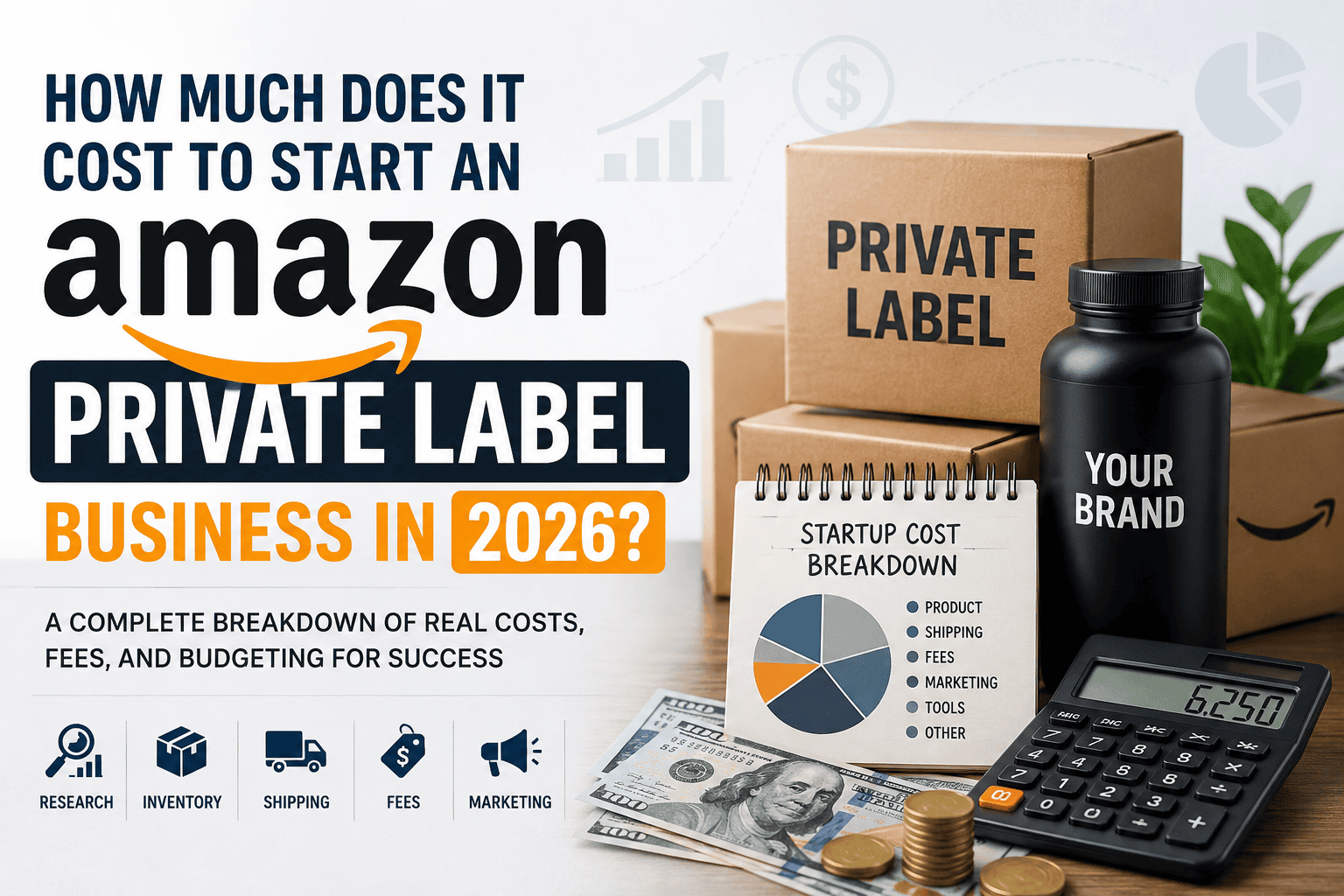
In 2026, starting a private label business on Amazon is still one of the most popular methods of building an e-commerce brand, and however, one of the very first questions that new entrepreneurs ask is:
How much money do I really need to begin?
It all comes down to the product you're dealing with, your sourcing strategy, how much you spend on marketing, and your growth objectives. Although a number of sellers attempt to get going with less than $1,500, the majority of private label businesses that are successful nowadays need a more substantial amount of investment, ranging from $3,000 to $8,000.
The guide examines all the major expenses so that you can draw up a realistic budget before making your first order.
Amazon Private Label Startup Cost Overview
| Expense | Estimated Cost |
|---|---|
| Product Research Tools | $50–$300/month |
| Product Samples | $100–$500 |
| Inventory | $1,000–$5,000 |
| Shipping | $300–$2,000 |
| Logo & Packaging | $100–$600 |
| UPC Barcode | $0–$30 |
| Brand Registry (Trademark) | $350–$1,200 |
| Amazon Professional Seller Account | $39.99/month |
| Product Photography | $150–$700 |
| Listing Optimization | $100–$500 |
| PPC Launch Budget | $300–$2,000 |
| Miscellaneous | $200–$800 |
Typical Total Investment: $3,000–$8,000
1. Product Research Costs
Everything starts with finding the right product.
Professional sellers use research software instead of guessing.
Popular tools include:
- Helium 10
- Jungle Scout
- Keepa
- SellerSprite
These tools help identify:
- Search demand
- Competition
- Estimated monthly revenue
- Profit margins
- Seasonal trends
Estimated Cost
$50–$300/month
Many beginners only subscribe for the first few months.
2. Product Samples
Never launch without ordering samples.
Samples help verify:
- Quality
- Packaging
- Materials
- Functionality
- Manufacturer reliability
Many suppliers charge for samples plus shipping.
Estimated Cost
$100–$500
Ordering from multiple suppliers is highly recommended.
3. Initial Inventory
Inventory is your largest startup expense.
Manufacturers usually require a Minimum Order Quantity (MOQ).
Typical first orders include:
- 200 units
- 300 units
- 500 units
Inventory costs depend on:
- Product size
- Manufacturing country
- Materials
- Packaging
- Custom branding
Example:
300 units × $6 per unit = $1,800
Estimated Cost
$1,000–$5,000
4. Shipping Costs
Shipping often surprises first-time sellers.
Your costs depend on:
- Air freight
- Ocean freight
- Courier shipping
- Product dimensions
- Weight
- Customs duties
Ocean shipping is cheaper but slower.
Air shipping is faster but significantly more expensive.
Estimated Cost
$300–$2,000
5. Logo and Packaging Design
Professional branding builds trust.
Most private label sellers invest in:
- Logo design
- Product insert cards
- Packaging artwork
- Label design
Professional branding increases perceived value.
Estimated Cost
$100–$600
6. UPC Barcode
Most products require a UPC barcode.
You can obtain one through GS1 or, in some categories, use an Amazon-issued GTIN exemption if your product qualifies.
Estimated Cost
$0–$30
7. Trademark & Amazon Brand Registry
Brand Registry protects your listings and unlocks premium tools such as:
- A+ Content
- Brand Store
- Sponsored Brands
- Better counterfeit protection
Most sellers file a trademark before or during launch.
Estimated Cost
$350–$1,200
8. Amazon Seller Account
Professional sellers need Amazon's Professional selling plan.
Current fee:
$39.99 per month
This account provides:
- Bulk listing tools
- Advertising access
- Better reporting
- Inventory management
9. Product Photography
Images are one of the biggest conversion factors.
A professional photo package typically includes:
- Main image
- Lifestyle images
- Infographics
- Dimensions
- Feature graphics
High-quality images improve both click-through rates and conversions.
Estimated Cost
$150–$700
10. Listing Optimization
Your listing includes:
- SEO title
- Bullet points
- Product description
- Backend keywords
- A+ Content
A well-optimized listing helps improve visibility and sales.
Estimated Cost
$100–$500
11. Amazon PPC Launch Budget
Advertising is almost essential for launching a new private label product.
Most new sellers run:
- Sponsored Products
- Sponsored Brands (if Brand Registered)
- Sponsored Display (optional)
A realistic launch budget helps generate initial traffic and collect reviews through compliant methods.
Estimated Cost
$300–$2,000
12. Miscellaneous Costs
Other expenses may include:
- Product inspection
- Quality control
- Business registration
- Accounting software
- Freight insurance
- Banking fees
- Currency exchange fees
- Returns and replacements
Budget an additional:
$200–$800
Example Amazon Private Label Startup Budget
| Item | Cost |
|---|---|
| Research Tools | $99 |
| Samples | $250 |
| Inventory | $2,200 |
| Shipping | $850 |
| Branding | $300 |
| Trademark | $700 |
| Photography | $400 |
| Listing Optimization | $300 |
| PPC | $1,000 |
| Miscellaneous | $400 |
Total Startup Cost: Approximately $6,499
This example represents a solid launch budget for a single product rather than the minimum possible investment.
Can You Start with Less Than $2,000?
Yes—but it comes with trade-offs.
You may need to:
- Order fewer units
- Choose a lower-cost product
- Design some assets yourself
- Limit advertising
- Delay trademark registration (if appropriate for your strategy)
A smaller budget can work, but it often increases the risk of stockouts and leaves less room for testing and optimization.
Hidden Costs Beginners Often Forget
Many first-time sellers overlook:
- Storage fees
- Amazon FBA fees
- Long-term storage charges
- Return processing fees
- Product inspection
- Packaging revisions
- PPC optimization
- Inventory replenishment
- Currency conversion
- Import duties and taxes
Planning for these expenses helps avoid cash flow problems after launch.
Tips to Reduce Startup Costs
You don't always need the largest budget to succeed. Consider these strategies:
- Start with one product instead of multiple SKUs.
- Negotiate lower MOQs with suppliers.
- Compare quotes from several manufacturers.
- Use ocean freight when timing allows.
- Avoid oversized or heavy products to reduce shipping and FBA fees.
- Reinvest profits into additional inventory instead of expanding too quickly.
Is Amazon Private Label Still Worth It in 2026?
Yes—if you approach it like a business rather than a quick side hustle.
Competition is stronger than it was years ago, but there are still opportunities for sellers who:
- Choose products using data instead of trends alone.
- Build a recognizable brand.
- Optimize listings for Amazon SEO.
- Invest in PPC strategically.
- Deliver a high-quality customer experience.
- Manage inventory and cash flow carefully.
Success requires planning, patience, and continuous optimization—not just launching a product.
Frequently Asked Questions
How much money do I need to start Amazon Private Label?
Most new sellers should plan for $3,000–$8,000, depending on product cost, inventory size, and marketing budget.
What is the biggest startup expense?
Inventory is typically the largest cost, followed by shipping and advertising.
Can I start Amazon Private Label with $1,000?
It's possible in limited cases, but you'll face tighter inventory, marketing, and cash-flow constraints, making growth more challenging.
Is Amazon PPC required?
While not technically mandatory, PPC is the primary way most new private label products gain visibility and early sales.
How long does it take to recover the initial investment?
This varies based on product demand, margins, advertising efficiency, and inventory management. Some sellers recover their investment within a few months, while others take longer.
Final Thoughts
Launching an Amazon private label business in 2026 requires more than simply ordering products and listing them online. A realistic budget should cover product research, inventory, shipping, branding, advertising, and unexpected operating costs.
For many first-time sellers, budgeting $3,000–$8,000 provides enough flexibility to launch professionally, test the market, and scale without running into immediate cash-flow issues. Careful planning, disciplined spending, and a data-driven product selection process remain the keys to building a sustainable Amazon brand.