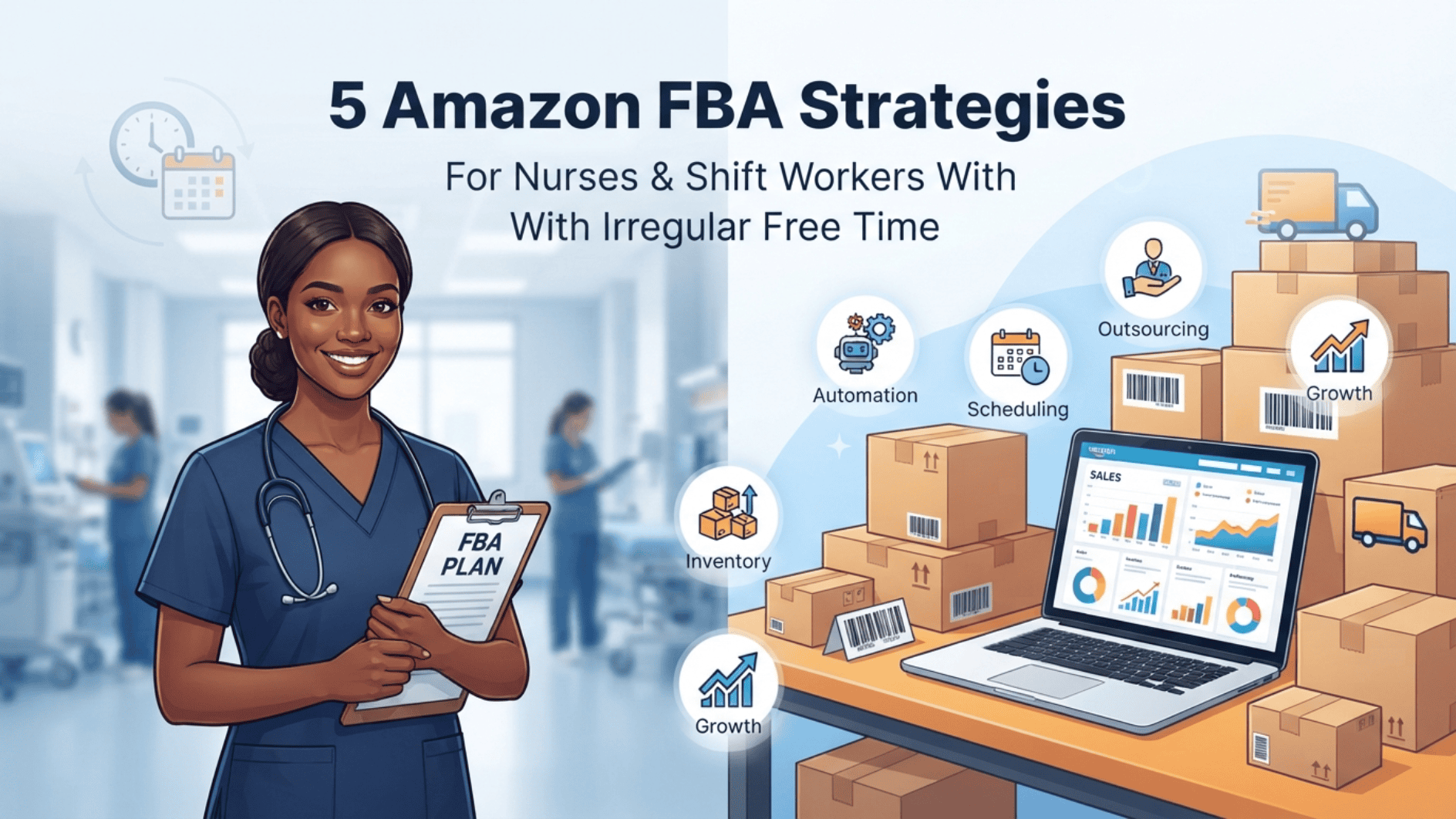
Long shifts, changing schedules, and weekend work can make starting an Amazon FBA business seem out of reach. Still, many nurses and other shift workers have built successful Amazon stores since FBA lets you run your business without being available daily.
The key is not to work more hours, but to use your limited time wisely.
This guide covers five practical Amazon FBA strategies made for people with unpredictable schedules.
Why Amazon FBA Works Well for Nurses
Healthcare professionals often have:
- Long but compressed workweeks
- Multiple consecutive days off
- Stable income to invest in inventory
- Strong organizational skills
- Ability to follow systems and procedures
Amazon FBA takes care of storage, packing, shipping, returns, and most customer service. This lets sellers focus on finding products and managing inventory.
1. Batch Your Amazon Tasks
Rather than working on your business daily, set aside one or two focused sessions each week.
For example:
Monday (Day Off):
- Product research
- Competitor analysis
- Keyword research
Thursday Evening:
- Contact suppliers
- Review inventory
- Check PPC performance
Weekend:
- Financial review
- Update listings
- Plan next week
Batching your tasks helps you avoid distractions and make real progress, even if you only have a few hours to spare.
2. Focus on One Business Model
Learning every Amazon selling method at once can waste your valuable time.
Pick one business model and get really good at it.
Popular beginner-friendly options include:
- Private Label
- Online Arbitrage
- Wholesale
- Retail Arbitrage
- Print on Demand
If your schedule changes a lot, wholesale and private label usually need less daily sourcing than arbitrage once you have your systems set up.
3. Automate Repetitive Work
Automation can save you hours each month.
Useful automations include:
- Inventory alerts
- Automatic PPC rules
- Supplier reorder reminders
- Accounting software integration
- Email templates
- Keyword rank tracking
Helpful tools include:
- Helium 10
- Jungle Scout
- Keepa
- Sellerboard
- InventoryLab
Automation cannot make decisions for you, but it does cut down on repetitive admin work.
4. Build Standard Operating Procedures (SOPs)
After a few busy workdays, shift workers can lose momentum.
Create straightforward checklists to ensure you always have a clear next step.
Example weekly checklist:
Monday
- Check inventory
- Review sales
- Analyze competitors
Wednesday
- Respond to suppliers
- Review PPC campaigns
Friday
- Place inventory orders
- Update spreadsheets
Sunday
- Research one new product
Sticking to the same routine each week saves you time and helps you get started quickly.
5. Outsource Low-Value Tasks
Your limited free time should be spent making business decisions—not completing repetitive work.
You should spend your limited free time making business decisions, not doing repetitive tasks.
- Customer email management
- Spreadsheet updates
- Basic keyword research
- Data entry
Virtual assistants can handle many routine tasks. This lets you focus on finding products, planning inventory, and growing your business.
Sample Weekly Schedule for a Nurse
| 30 minutes after shift | Review sales dashboard |
| First day off | Product research |
| Second day off | Supplier communication |
| Weekend evening | PPC optimization |
| Monthly | Inventory planning and financial review |
Even just 5 to 8 focused hours a week can help you make steady progress if you spend them on important tasks.
Common Mistakes Shift Workers Make
Avoid these pitfalls:
- Trying to work every single day
- Launching too many products at once
- Constantly switching business models
- Ignoring inventory planning during busy work periods
- Spending hours watching tutorials instead of taking action
- Delaying automation and outsourcing
Being consistent is more important than the number of hours you work.
Best Amazon FBA Tools for Busy Professionals
Consider using tools that reduce manual work:
- Helium 10 – Product research, keyword tracking, listing optimization
- Keepa – Price history and sales trend analysis
- Jungle Scout – Product validation and market research
- Sellerboard – Profit tracking and analytics
- InventoryLab – Inventory and accounting management
Only pay for tools you will actually use. Unused software just adds extra costs.
Final Thoughts
Unpredictable work hours won’t prevent you from building a successful Amazon FBA business. You just need a different strategy. By batching tasks, focusing on a single business model, automating repetitive work, establishing clear workflows, and outsourcing routine tasks, nurses and shift workers can grow their Amazon business without sacrificing their primary careers. creating clear workflows, and outsourcing routine tasks, nurses and shift workers can grow an Amazon business without giving up their main careers.
Success with Amazon FBA. You do not need to work every day to succeed with Amazon FBA. Success comes from having good systems, being consistent, and making the most of your available time.
Frequently Asked Questions?
Yes. Because Amazon handles fulfillment, shipping, returns, and much of customer service, sellers can manage many aspects of the business during their days off.
Many part-time sellers begin with 5–10 hours per week. As systems and automation improve, maintaining the business often requires less day-to-day involvement.
Private Label and Wholesale are often well-suited because they rely more on planning and supplier relationships than frequent product sourcing.
Most successful sellers start Amazon FBA as a side business while keeping their full-time income. Consider transitioning only after your business consistently generates reliable profits.
Discover the latest articles, insights, and news on our blog.