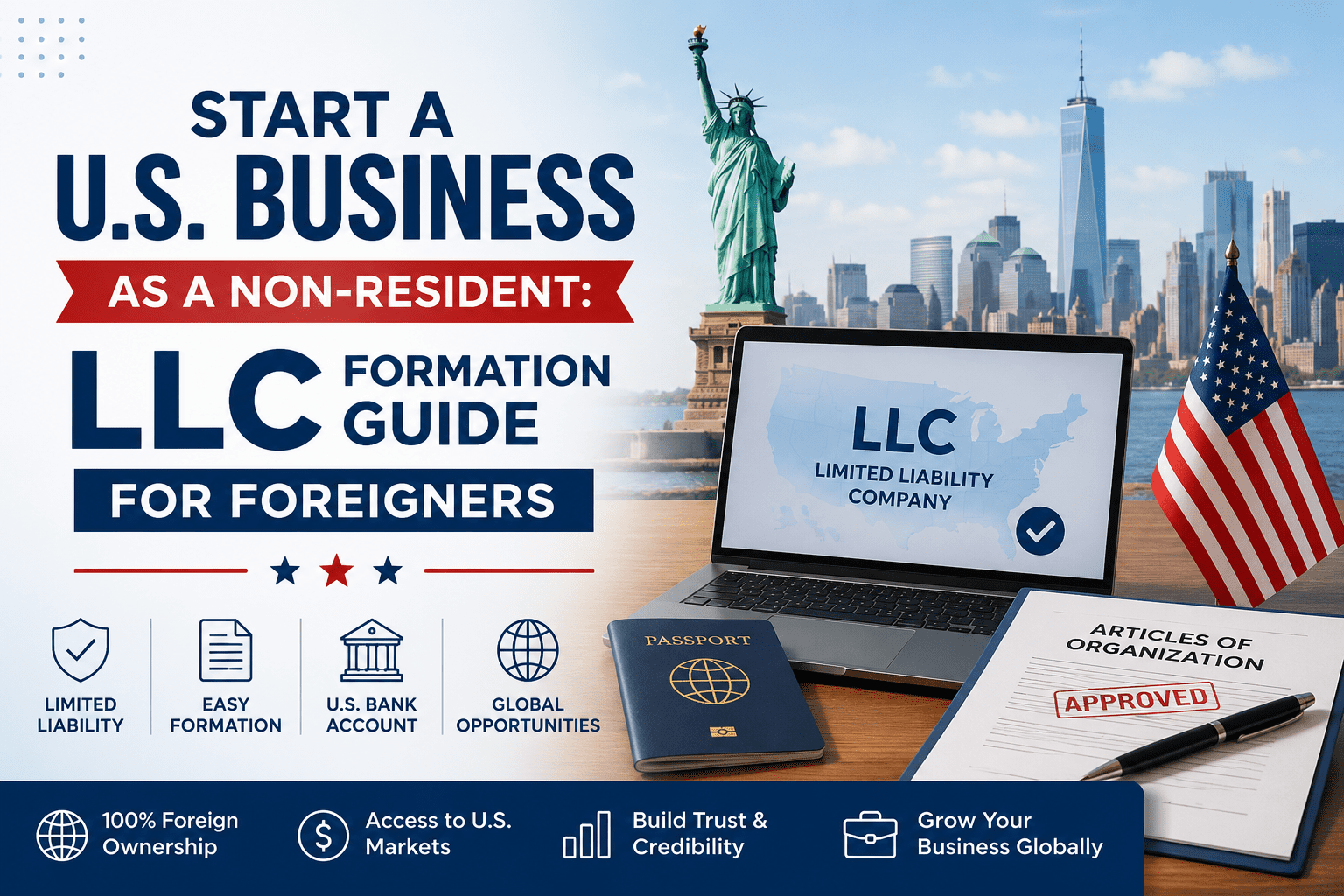
Launching a business in the U.S. might seem difficult if you're based outside of the country. However, there's good news: you don’t need to be a U.S. citizen or even visit the U.S. to start a real, legal company that can take payments, sign clients, and grow your business globally. In fact, forming a Limited Liability Company (LLC) is one of the easiest ways for people living overseas to enter the U.S. market.
Whether you're a SaaS founder wanting to use Stripe, a digital marketer trying to invoice U.S. customers, or an e-commerce seller aiming to scale, an LLC can help you achieve these goals. This guide explains the complete process of forming an LLC as a non-U.S. resident, including the requirements, paperwork, and key steps involved.
We’ll explain how to select the best state, prepare the required paperwork, and handle your company’s operations, tax responsibilities, and legal requirements while running your business remotely.
Can Foreign Nationals Legally Own a U.S. LLC?
Yes, and it's not only allowed, but also quite common. There's no rule that says you must be a U.S. citizen or have a green card.
Thousands of foreign business owners launch U.S. LLCs every year while living abroad.The process is straightforward and requires only a valid passport.
Step 1: Choose Your LLC Name
Select a unique name for your LLC that meets your state’s requirements:
- Confirm that the name is available and not registered by another business
- Include “LLC” or “Limited Liability Company” as required
- When choosing an LLC name, avoid using restricted terms that may require special approval, such as: "banks," "Trust," "University," and government-related terms.
Step 2: Appoint a Registered Agent
You'll need someone with a physical address in the state where you're filing your LLC to receive legal documents and notices on your behalf. This is a legal requirement — and no, a P.O. Box won't work. If you don't have someone in the U.S., services like agencomatic can act as your registered agent and provide a virtual address.
Step 3: File Articles of Organization
This is the official document you file with the state to legally establish your LLC.
You'll usually provide: The LLC name - Business address - Registered agent details - Member or manager information. This can typically be filed online and processed in a few days, or sometimes within 24 hours in states like Wyoming.
Step 4: Create an Operating Agreement
While not mandatory in all states, this internal document outlines: - Ownership structure - Voting rights - Profit distribution - Roles and responsibilities.
Step 5: Obtain Your EIN (Employer Identification Number)
An EIN (Employer Identification Number) works like a Social Security Number (SSN) for your business. It is required for filing taxes, opening a business bank account, and registering with payment platforms like PayPal and Stripe. Even if you do not have an SSN, you may still be eligible to apply for an EIN.
Step 6: Open a U.S. Business Account
After obtaining your EIN, you can move forward with opening a U.S. business bank account and setting up payment services like Stripe. Some banks, such as Bank of America, may require an in-person visit, while other financial institutions allow non-residents to open accounts remotely. Agencomatic can assist you throughout the entire process.
Step 7: Stay Updated With Ongoing Compliance Requirements
After forming your LLC, you still need to meet ongoing compliance obligations.
These may include filing annual reports, paying state-specific franchise taxes, completing BOI (Beneficial Ownership Information) reporting, and submitting IRS requirements such as Form 5472 for certain foreign-owned single-member LLCs.