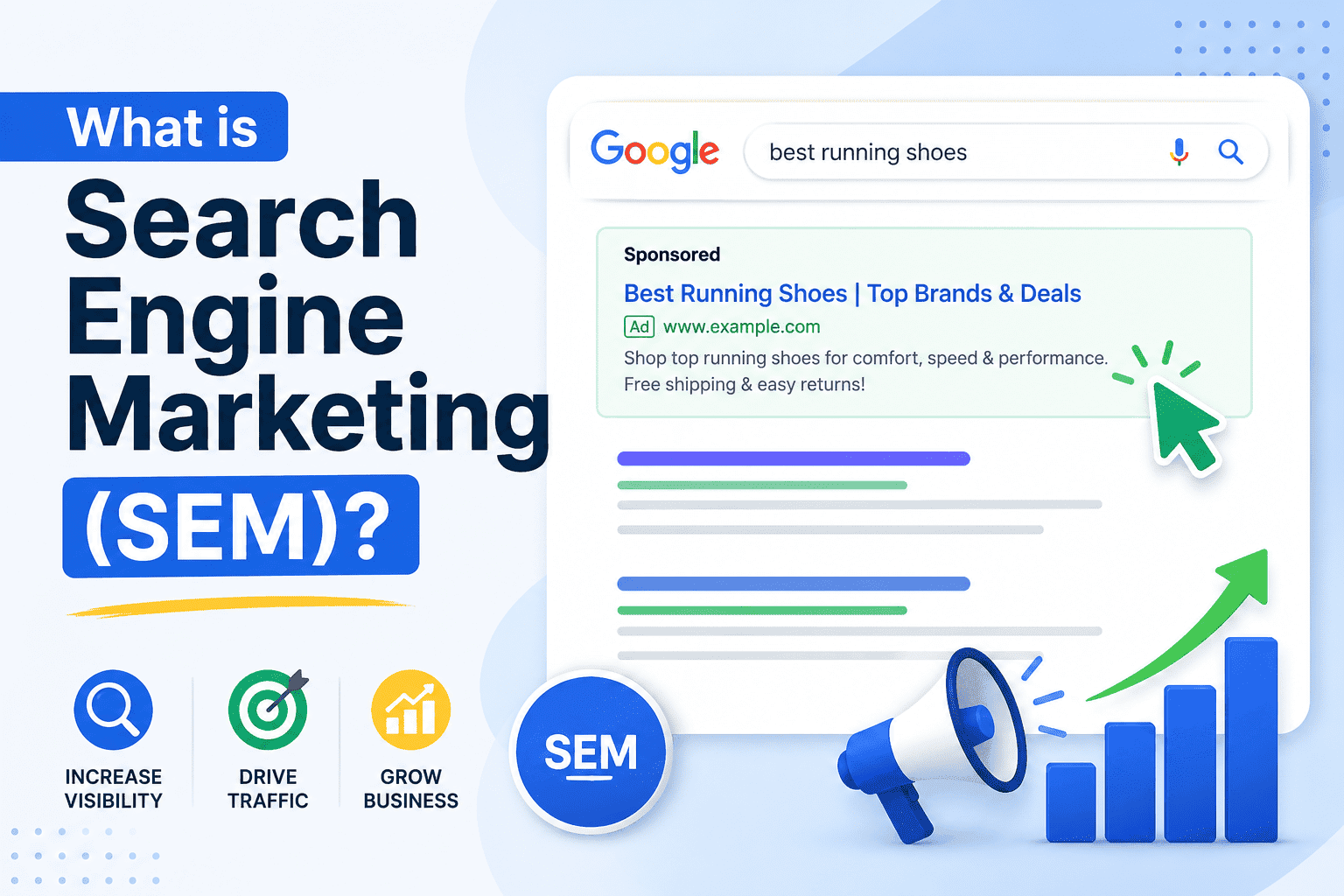
Search engine marketing, or SEM, is a digital marketing approach designed to create quality leads and boost a website's presence in search engine results pages. It involves paid search advertising and is also known as pay-per-click or PPC advertising. As more people use the internet to look for and buy products, SEM has become an essential method for businesses to expand their online reach.
In SEM, advertisers only pay when their ads lead to actual visitors, making it a cost-effective use of marketing budgets.
Additionally, each visitor can help improve a website's position in organic search results. Since users searching online are often looking for products or services to purchase, they are more likely to convert. SEM offers quick results and is one of the most effective ways to bring traffic to a website.
How SEM Works
In paid search advertising, sponsored ads appear at the top of and on the side of search engine results pages to gain more visibility and prominence than the organic results. In your search results page, you will come across various company ads whose keywords match the keywords in your search. The paid listings are highly relevant to your specific search, making it likely that you will click on them. Text-only ads are easy to produce. Marketers enter a headline, text for the body of the ad, a call-to-action and a URL for the hyperlink.
When setting up a campaign within an SEM network, the marketer is prompted to:
- Conduct keyword research and select a set of keywords related to their website or product
- Select a geographic location for the ad to be displayed within
- Create a text-based ad to display in the search results
- Evaluate the cost per click (CPC) of given keywords
Create Ad Copy
Most forms of SEM will allow you to create headlines, descriptions, and ad extensions. Start with compelling headlines that really speak to the search intent behind the keywords you’re targeting. Next, highlight unique selling points in your description so that searchers can get a sense of what they can expect when they click on your ad. Ad extensions are an effective way to maximize your ads with relevant content that enhances the user experience. Some examples of ad extensions are sitelinks, phone numbers, callouts, structured snippets, and in some cases, user ratings.
Optimize Landing Pages
Ensure your landing pages are relevant to the ad copy that got your users there in the first place. This will boost ad rank and quality score (your potential to rank higher while paying less for target keywords), increase website traffic, and ultimately improve conversion rates. Some simple ways to improve your landing pages is to include clear calls-to-action (CTA), implement responsive design for mobile users, optimize page speed, and quality content.
- Improve quality score to lower the total cost of ads showing up.
- Add extensions like sitelinks to highlight specific web pages, callouts to highlight specific features, call extensions for phone numbers, or even customized URLs to improve click-through rates (CTR).
- Implement remarketing to reinforce brand awareness and ensure your ads are staying top of mind as they continue browsing onto other apps or pages.
Why Businesses Need a Strategic Approach to SEM
Search engine marketing is one of the most reliable ways to generate high-intent traffic, leads, and revenue. While SEM can deliver powerful results, it’s not just about running ads or publishing content. Success requires a clear strategy, ongoing optimization, and a deep understanding of customer behaviour.
For companies looking to compete online, SEM isn’t optional. It’s essential.